
Motorcycle wind chill calculator
Calculate motorcycle wind chill in °C and km/h using sourced coefficients. Compare speeds and wind direction, with clear limits and gear guidance.
Compare ambient wind and riding airflow
Your inputs. Clear limits. A better riding plan.
Your next great ride starts with the right forecast.
Temperature and speed chart
°C and km/h. Hatched cells are outside the NWS formula domain. Speed columns illustrate riding airflow in calm air.
Weather guidance, not a guarantee of safe riding. Check official warnings, road conditions and the full outward and return journey.
A GO cannot assess your bike, equipment, ability or every hazard.
Better weather
Better rides
What the calculation means
The standard North American formula is Twc = 13.12 + 0.6215T − 11.37V0.16 + 0.3965TV0.16, with T in °C and V in km/h. This tool uses the NWS domain: air temperature at or below 10°C and wind above 4.828032 km/h (3 mph). Outside that range it displays “outside formula range”, not an invented feels-like value.
Environment Canada uses the same standard coefficients but reports wind chill at air temperatures at or below 0°C; for winds below 5 km/h it uses a separate low-wind branch. This calculator consistently uses the NWS range and does not mix reporting policies.
Moving-rider estimate and limits
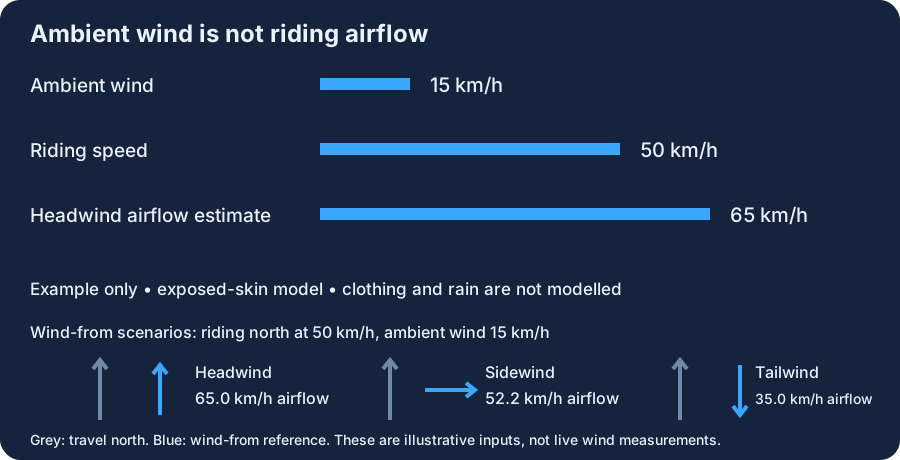
The riding result substitutes relative airflow: √(S² + W² + 2SW cos(wind-from − heading)). A headwind adds to riding airflow; a tailwind subtracts. In calm air, relative airflow equals riding speed. Using that airflow in the wind-chill formula is an illustration, not a validated clothed-motorcyclist model.
The model estimates cooling of exposed skin. Clothing, helmet coverage, fairings, wetness, sun, exposure duration and individual physiology are not modelled. It does not predict frostbite time or road-ice formation and must not replace the ambient forecast cold score. Use the rain-and-cold checklist to assess equipment separately.
Sources and limits
- NWS wind-chill model and limits
- Environment Canada wind-chill formulas
- Motorcycle Safety Foundation: protective gear
Source review: 10 October 2026. Forecasts: Open-Meteo, CC BY 4.0. Planning thresholds are GoNoGo preferences.